The common belief that finding authentic destinations is a matter of luck is wrong; it’s a strategic skill based on reading the future of tourism.
- The lifecycle of a destination from « secret spot » to « overrun » is predictable, often accelerated by a single viral moment.
- By analysing leading indicators like UNESCO tentative lists and infrastructure investments, you can visit 5-10 years ahead of the crowds.
Recommendation: Shift your mindset from passively avoiding tourists to proactively forecasting a destination’s popularity curve. This guide shows you how.
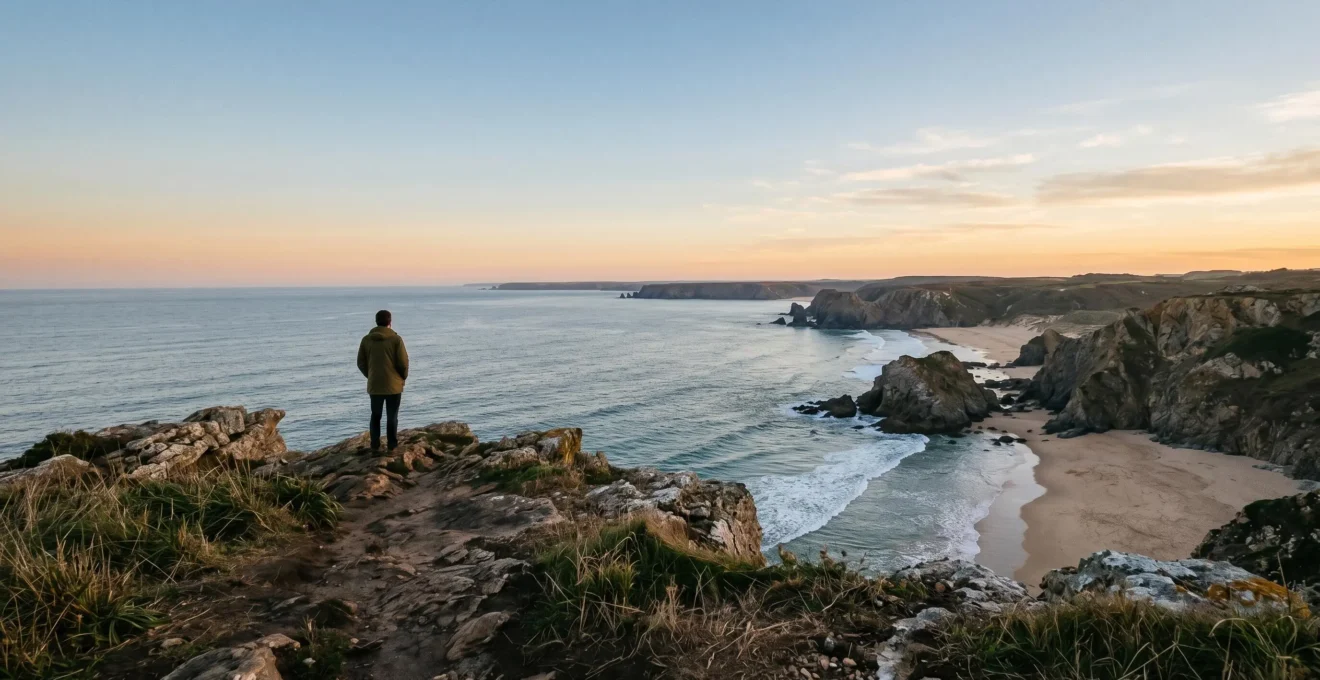
You’ve seen the picture: a pristine, empty beach, a lone hiker on a dramatic mountain ridge, a quaint European alley bathed in golden light. You book the flight, full of anticipation. But when you arrive, you find a queue for the « Instagram spot, » the sound of a hundred camera shutters, and a sense of profound disappointment. This experience is a hallmark of modern travel, a frustrating cycle where the very tools we use to find beauty are responsible for its dilution. We are loving our planet’s most beautiful places to death.
The standard advice— »go in the off-season » or « wander off the beaten path »—is no longer enough. These are reactive measures in a world where a single TikTok video can turn a quiet canyon into a major tourist attraction overnight. The desire for authentic, uncrowded travel is higher than ever, especially for discerning UK travellers weary of the crowds. But what if the solution wasn’t about avoiding the crowds, but getting there years before they even form? What if you could learn to read the faint signals that predict a destination’s rise to fame?
This isn’t about luck or extreme exploration. It’s about becoming a ‘tourism futurist’—a traveller who understands the systemic forces that shape a destination’s journey from discovery to over-saturation. This guide moves beyond clichés to provide a strategic framework for identifying tomorrow’s incredible destinations today. We’ll decode the lifecycle of a tourist hotspot, equip you with predictive tools, and explore the ethical responsibilities that come with being ahead of the curve. It’s time to trade frustration for foresight and reclaim the thrill of true discovery.
To help you navigate this new approach to travel, we’ve broken down the essential strategies into a clear and actionable guide. This table of contents outlines the key stages of your journey, from understanding the problem to finding your own unspoiled corners of the world.
Contents: A Strategist’s Guide to Escaping the Crowds
- Why Does Every « Secret » Beach Become Overcrowded Within 3 Years?
- How to Discover Next Year’s Hot Destinations Before They Appear in Guides?
- Should You Share Your Secret Travel Spots or Stay Silent to Protect Them?
- The Traveller Trap of Loving Places to Death Through Unprepared Visits
- When Has a Destination Already Become Too Popular to Visit?
- Lake District vs Lesser-Known Dales: Which Offers Better Landscape Experience?
- When Should You Avoid Destinations Suffering From Overtourism?
- Where Can You Find Stunning Natural Landscapes Without Leaving the UK?
Why Does Every « Secret » Beach Become Overcrowded Within 3 Years?
The journey from a pristine hideaway to an overcrowded hotspot follows a predictable, yet tragically rapid, trajectory. This phenomenon, often dubbed the « tourism trajectory, » is no longer a slow burn taking decades; it’s a flash flood, often triggered by a single viral moment. A destination can be catapulted from the « Pioneer » stage, visited only by intrepid explorers, to the « Mass Market » stage in a frighteningly short period, completely bypassing the gradual development needed to build a resilient infrastructure.
The Fjaðrárgljúfur Canyon Effect: The Power of a Single Video
Iceland’s Fjaðrárgljúfur canyon was a relatively unknown gem until it featured in Justin Bieber’s 2015 ‘I’ll Show You’ music video. The video, with over 440 million views, acted as a global advertisement. The result was catastrophic for the canyon’s fragile ecosystem. According to data from Iceland’s Environment Agency, visitor numbers exploded. Daníel Freyr Jónsson of the agency noted, « This canyon was somewhat unknown… The great increase in foot traffic began after Bieber came. » In fact, an analysis shows that after the video’s release, visitor numbers increased from 150,000 to 282,000 between 2017 and 2018 alone. The unprepared site suffered severe damage to its vegetation, forcing authorities to close it to the public to allow it to recover. This « Bieber Effect » is the perfect case study for how social media exposure can overwhelm a location’s carrying capacity almost instantly.
This cycle is driven by the digital amplification loop. An influencer « discovers » a spot, they share it with a geotag, their followers flock to replicate the shot, and algorithms push the popular location to an even wider audience. Within a few seasons, the very qualities that made the place special—solitude, pristine nature, authentic culture—are eroded by the sheer volume of visitors. Understanding this mechanism is the first step in learning how to get ahead of it.
How to Discover Next Year’s Hot Destinations Before They Appear in Guides?
To truly get ahead of the crowds, you must stop looking where everyone else is looking—travel magazines, popular blogs, and Instagram feeds. These are trailing indicators of popularity. The key is to start monitoring the leading indicators—the predictive signals that point to where investment and attention are flowing, years before the first tourist bus arrives. This is less about stumbling upon a hidden gem and more about strategic research and trend forecasting.
One of the most powerful and underutilised tools for this is the UNESCO World Heritage Centre’s own database. Before a site achieves the world-famous World Heritage status, it must spend at least a year on a country’s « Tentative List. » This list is a public catalogue of high-quality, culturally or naturally significant places that are on the path to recognition but haven’t yet been hit by the tidal wave of tourism that follows an official designation. By analysing these lists, you can create a map of future hotspots.
By cross-referencing these tentative sites with other predictive signals, like announcements of new airline routes or government investments in tourism infrastructure, a clear picture emerges. You can identify which locations are not just beautiful, but are also being primed for growth. This allows you to visit when the destination is in its « sweet spot »—recognised for its value but not yet overwhelmed, allowing for a more authentic and sustainable interaction.
Should You Share Your Secret Travel Spots or Stay Silent to Protect Them?
As you become adept at finding these incredible, untouched places, you will inevitably face an ethical crossroads: do you share your discovery, or do you protect it by keeping silent? The impulse to post a stunning photo is strong, but as we’ve seen with the « Bieber Effect, » a single geotag can have devastating consequences. Organisations like the Biosphere Sustainable Tourism Organization explicitly advise travellers to « avoid geotagging fragile places, » but the decision is more nuanced than a simple « share » or « don’t share. »
The more responsible approach is to assess a location’s « destination resilience »—its inherent ability to handle an increase in visitors without suffering environmental or cultural damage. A well-developed town with a history of tourism and locally-owned businesses might benefit from carefully managed promotion. A fragile ecosystem or an isolated community with no tourism infrastructure will not. Instead of a blanket rule, a more thoughtful traveller asks: « Is this place ready for more people? »
To make this assessment, you can use a simple framework. Before you post that photo or share the location with your network, run it through a mental checklist to gauge its resilience. This shifts the focus from your personal desire for validation to the well-being of the destination itself.
Your ethical checklist: Assessing a destination’s resilience
- Infrastructure Capacity: Does the location have adequate waste management, toilets, and parking to handle more people without degradation?
- Economic Distribution: Would new tourism primarily benefit locally-owned businesses and residents, or would profits be extracted by external corporations?
- Environmental Protections: Are there existing conservation measures, visitor limits, or protected area designations in place to manage increased foot traffic?
- Cultural Robustness: Is the local culture open to tourism and resilient, or is it fragile and at risk of being commodified or eroded by outside influence?
- Current Visitor Impact: Is the location already showing signs of stress, or does it have genuine capacity for sustainable growth that would benefit the community?
The Traveller Trap of Loving Places to Death Through Unprepared Visits
Discovering a destination before it becomes mainstream is only half the battle. The other half lies in how we behave when we get there. The greatest trap for the well-intentioned traveller is contributing to the very problem they seek to escape, simply by being unprepared. With global tourism recovering faster than anticipated— international tourist arrivals are expected to surpass pre-pandemic levels by the end of 2024—the pressure on all destinations, hidden or famous, is immense. An unprepared visit, even to a resilient location, can add to the strain.
Being a prepared visitor means going beyond booking flights and accommodation. It involves investing time in understanding the local context. This includes learning a few phrases in the local language, researching cultural etiquette (e.g., dress codes for religious sites, tipping customs), understanding the local economy to ensure your money supports residents, and being aware of environmental sensitivities. Do they have a plastic waste problem? If so, arriving with your own reusable water bottle and filter is a small but impactful act.
This preparation transforms you from a passive consumer into a mindful participant. It’s the difference between a tourist who demands that a destination conform to their expectations and a traveller who adapts to respectfully engage with a place on its own terms. This mindset not only minimises your negative impact but also dramatically enriches your own experience, opening doors to more genuine interactions and a deeper connection to the place you’ve worked so hard to find.
When Has a Destination Already Become Too Popular to Visit?
Part of being a tourism futurist is not just knowing where to go, but also knowing when a destination has passed its tipping point. Recognising the red flags of overtourism allows you to make an informed decision to stay away, redirecting your time and money to places that can benefit from your visit rather than suffer from it. But what are these warning signs? They often appear long before the official headlines, visible to any traveller willing to look beyond the glossy brochures.
The signs range from the obvious to the subtle. Dedicated queues forming just for a photo opportunity, a proliferation of souvenir shops selling identical trinkets, and a local population that seems weary or resentful of tourists are all classic indicators. When the daily experience of residents is significantly degraded by tourism—when they can no longer afford to live in their own city or perform daily errands without wading through crowds—the destination is in distress. For example, the situation in Venice accommodates 20 million tourists per year for a population of just 250,000, a staggering ratio that illustrates an ecosystem at its breaking point.
To help you diagnose a destination’s health, you can use a simple scorecard of overtourism’s most critical warning signs. If a place you’re considering ticks several of these boxes, it might be time to look for an alternative.
- Government Intervention: Has the government implemented drastic measures like entry fees (Venice’s €5 day-visitor fee), visitor caps (the Acropolis), or de-marketing campaigns asking tourists not to come?
- Local Protests: Have residents organised public demonstrations against tourism? Signs reading « Tourism Kills the City » or « My Home is Not Your Holiday » are unambiguous signals.
- UNESCO Warnings: Has the UN’s cultural body issued official warnings that visitor impact is threatening a site’s World Heritage status or integrity?
- Infrastructure Strain: Is basic infrastructure like public transport, waste management, or sanitation visibly overwhelmed? Are natural trails eroded and widened from overuse?
- Economic Displacement: Have local grocery stores and bakeries been replaced by souvenir shops and international chains? Have soaring short-term rental costs pushed long-term residents out?
Lake District vs Lesser-Known Dales: Which Offers Better Landscape Experience?
A key strategy for avoiding overtourism while still enjoying world-class scenery is the « Shoulder Destination » approach. This involves identifying a « honeypot » location—an iconic, often overcrowded primary destination—and then shifting your focus to a nearby, lesser-known area that offers a similar landscape or experience but with a fraction of the visitors. A perfect UK-based example of this is the choice between the Lake District National Park and the adjacent Yorkshire Dales National Park.
The Lake District is world-famous for its stunning lakes and fells, but this fame comes at a cost: high visitor density, traffic congestion on key roads like the A591, and a bustling, commercialised atmosphere in towns like Windermere and Ambleside. The Yorkshire Dales, while also a National Park, offers a much wilder, more solitary experience. Its landscape of rolling hills, dramatic limestone scars, and ancient stone walls is just as quintessentially British, but its visitor numbers are more dispersed.
Choosing between them depends entirely on your travel goals. A first-time visitor wanting easy access to iconic views with plenty of amenities might prefer the Lakes. However, for the authenticity-seeking traveller tired of crowds, the Dales offer a far superior landscape experience in terms of tranquillity and a sense of raw, untamed nature. The following comparison breaks down the key differences.
| Comparison Factor | Lake District (Primary Destination) | Yorkshire Dales (Shoulder Destination) |
|---|---|---|
| Visitor Density | High concentration, especially at iconic spots like Windermere and Grasmere | Lower visitor density with dispersed crowds across wider area |
| Infrastructure-to-Wilderness Ratio | High ratio: numerous cafes, gift shops, tarmac paths, visitor centers per square mile | Higher ratio of open access land and wild trails to amenities |
| Sensory Experience | Sound of traffic on A591, sight of parking queues, smell of fish and chips, bustling atmosphere | Sound of curlews and wind, sight of stone walls stretching for miles, smell of wild thyme, tranquil atmosphere |
| Character of Crowds | Broad cross-section: general tourists, day-trippers, coach tours, families | More dedicated walkers, nature enthusiasts, serious hikers seeking solitude |
| Accessibility | Excellent transport links, suitable for all fitness levels, extensive facilities | Requires more planning, often car-dependent, fewer amenities but more authentic experience |
| Best For | First-time visitors wanting iconic scenery with amenities and easy access | Experienced travelers seeking authentic wilderness, solitude, and unspoiled landscapes |
When Should You Avoid Destinations Suffering From Overtourism?
The decision to avoid a destination is a powerful one. It’s an active choice to withhold your economic contribution from a system that is causing harm and to refuse to be part of the problem. You should consider avoiding a destination when its negative impacts clearly outweigh the positives, particularly for the local community. When residents take to the streets to protest, it’s one of the most definitive signs that the social carrying capacity has been breached. This isn’t anti-tourism sentiment; it’s a desperate plea for sustainability and respect.
The protests in Barcelona are a stark example. When 3,000 residents protested on July 6, 2024, they were not just complaining about crowds; they were demanding a stop to the housing crisis fuelled by short-term rentals and a return to a city where local life is prioritised over tourist revenue. Visiting a place in the face of such clear opposition means ignoring the voices of the very community you are a guest in. Your holiday should not be the cause of a resident’s misery.
The responsibility doesn’t just lie with travellers; it’s a systemic issue that requires a shift from the entire industry. As Paula Vlamings, Chief Impact Officer of Tourism Cares, eloquently stated in a commentary on the future of travel:
The whole industry needs to be a lot more proactive. How do we conduct business? How do we market these destinations, and how do we serve the local communities that are being impacted? All that really needs a sustainable strategy going into the future.
– Paula Vlamings, Tourism Cares
As a traveller, you « vote » with your feet and your wallet. By choosing to avoid destinations that are visibly suffering and channelling your travel plans towards places that can benefit from sustainable tourism, you are actively supporting the kind of industry Vlamings describes. Avoid destinations where your presence would be a burden, not a benefit.
Key takeaways
- The « Instagram effect » is predictable; learning to read predictive signals is the key to finding places before they’re famous.
- Your responsibility doesn’t end at discovery; assessing a destination’s resilience before sharing is crucial.
- Adopt a « Shoulder Destination » strategy—visit the Dales, not just the Lake District—for more authentic experiences.
Where Can You Find Stunning Natural Landscapes Without Leaving the UK?
The quest for authentic, uncrowded, and stunning landscapes doesn’t have to involve a long-haul flight. For the UK-based traveller, some of the most rewarding discoveries are right on your doorstep. The key is to look beyond the usual honeypots—the well-trodden paths of the Lake District, Snowdonia, and the Scottish Highlands—and explore the UK’s other tiers of protected landscapes, which offer comparable beauty with a fraction of the crowds.
The UK has a rich tapestry of protected areas that are often overlooked in favour of the more famous National Parks. These designations are a fantastic starting point for finding true solitude and wildness. By focusing your planning on these lesser-known but equally spectacular areas, you can enjoy world-class scenery without contributing to the strain on the most popular sites. It’s the ultimate application of the « Shoulder Destination » strategy, applied domestically.
This approach requires a slight shift in planning, but the rewards are immense. Instead of searching for « things to do in Cornwall, » try searching for « quiet sections of the South West Coast Path » or « Northumberland Heritage Coast. » This strategic exploration can be guided by the following principles:
- Explore Areas of Outstanding Natural Beauty (AONBs): England, Wales, and Northern Ireland have dozens of AONBs, such as the Cotswolds or the Chilterns, offering landscapes as stunning as National Parks but with a more local, less-touristed feel.
- Discover National Scenic Areas (Scotland): Scotland’s 40 NSAs represent the country’s finest landscapes, many of which are far more remote and wild than the busy areas around Loch Lomond or Glen Coe.
- Walk Heritage Coasts: The UK’s designated Heritage Coasts protect the finest stretches of undeveloped coastline. Look for overlooked sections in places like the Llŷn Peninsula or the North Yorkshire and Cleveland coast.
- Target Dark Sky Preserves: Areas with official Dark Sky status, like Northumberland International Dark Sky Park, are by definition remote and undeveloped, making them perfect for finding solitude day or night.
- Hike Overlooked Trail Sections: Pick a long-distance path like the Pennine Way or Cambrian Way and choose to walk a section far from any major town or transport hub.
Ultimately, finding amazing destinations before they are ruined is a skill set. It requires moving from being a passive consumer of travel trends to an active, thoughtful explorer. By forecasting, assessing, and acting with responsibility, you can ensure your travels are a source of joy for you and a force for good in the world. Your next great, authentic adventure is out there—it just might not be on Instagram yet.