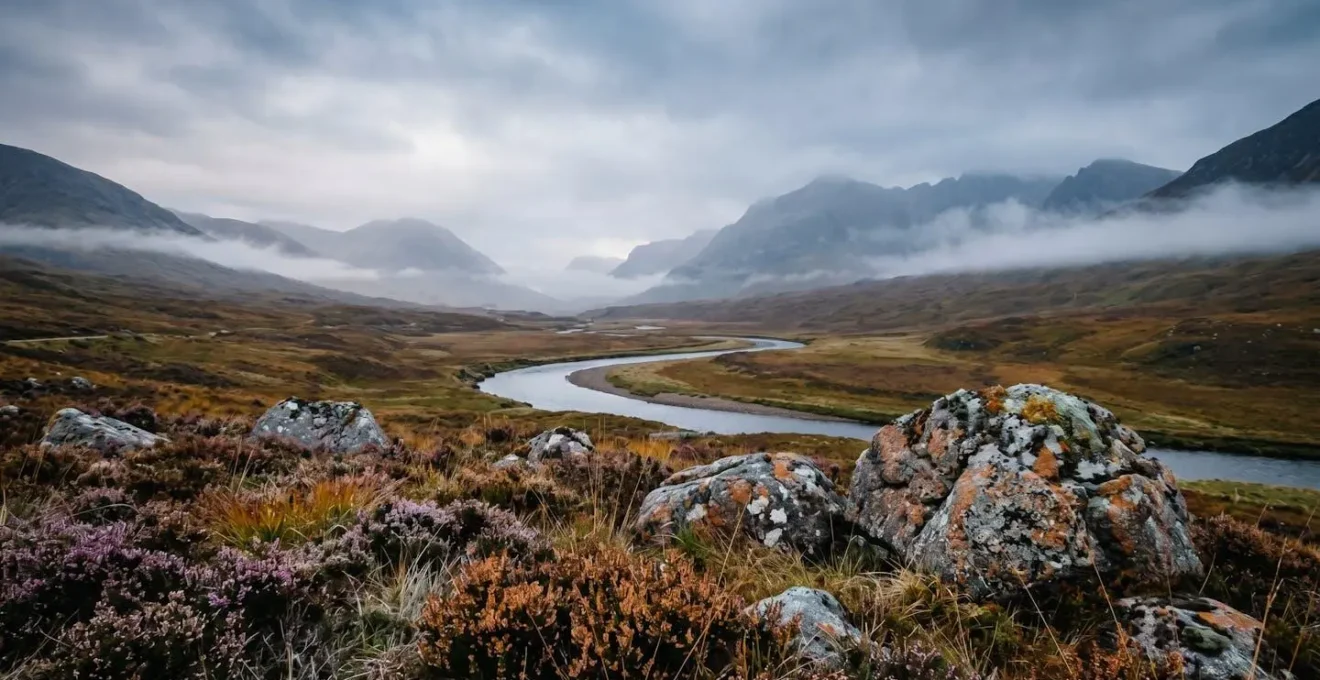
Contrary to popular belief, you don’t need a long-haul flight to find breathtaking landscapes; the UK’s most profound natural beauty is revealed when you shift your mindset from ‘sight-seeing’ to ‘sense-feeling’.
- True immersion happens away from crowded « viewpoint traps, » in the small, intimate details of the landscape.
- Timing is everything: autumn colours, « bad » weather, and micro-seasons often offer more spectacular experiences than a clear summer’s day.
Recommendation: Instead of chasing the famous postcard shot, apply the « 15-Minute Rule »: park at the main viewpoint, then walk for 15 minutes in any direction to discover a unique and personal connection with your surroundings.
There’s a common assumption among many of us in the UK. When we crave truly epic, soul-stirring landscapes, our minds automatically drift to far-flung destinations—the towering peaks of the Alps, the dramatic fjords of Norway, or the vast canyons of North America. We associate breathtaking natural beauty with a passport and a boarding pass, believing that what we have at home, while pleasant, is somehow a lesser version of the real thing.
This leads us to a predictable circuit of domestic travel: a weekend in the Lake District, a drive through the Cotswolds, or a trip to Cornwall’s coast. We visit the signposted viewpoints, take the same photos as everyone else, and tick another location off the list. But what if this entire approach is flawed? What if the reason we feel underwhelmed isn’t because of the landscape itself, but because of *how* we’re trained to look at it? The secret to unlocking the UK’s profound beauty doesn’t lie in finding a new destination, but in adopting a new perspective.
This guide is built on a simple but transformative idea: the most memorable landscape experiences come from sensory immersion and a focus on the intimate, not the epic. It’s about trading the crowded car park for a quiet footpath, the wide vista for the texture of moss on a stone, and the summer sun for the drama of an autumn storm. We will explore why a change in season can transform a place, how your smartphone is the only camera you need, and why the most rewarding views are the ones you have to work for.
By exploring these themes, you’ll gain a practical framework for turning any UK outing into a profound encounter with nature, proving that world-class landscapes are right here on our doorstep, waiting to be truly seen.
Summary: Discovering the UK’s Hidden Natural Treasures
- Why Are the Scottish Highlands More Spectacular in Autumn Than Summer?
- How to Capture Stunning Landscape Photos With Just Your Smartphone?
- Lake District vs Lesser-Known Dales: Which Offers Better Landscape Experience?
- The Viewpoint Trap That Robs You of True Landscape Immersion
- When Should You Visit UK Landscapes for the Best Light and Weather Conditions?
- Which Underrated UK Historical Sites Rival Famous Landmarks for Impact?
- Why Does One Long-Haul Flight Equal a Year of Driving?
- How Can You Experience UK Historical Landmarks as More Than Tourist Checkboxes?
Why Are the Scottish Highlands More Spectacular in Autumn Than Summer?
When you picture the Scottish Highlands, you might imagine long summer days and vibrant green hills. While summer has its charm, it’s also the season of peak tourism, crowded roads, and the infamous midge. For a truly spectacular and immersive experience, autumn is unrivalled. The landscape undergoes a dramatic transformation, shifting from a uniform green to a rich tapestry of gold, russet, and deep red as the bracken and birch trees turn. The air becomes crisp, and the low, golden light of the season casts long, dramatic shadows across the glens, accentuating the rugged topography in a way the high sun of summer cannot.
Beyond the sheer visual beauty, autumn offers a profound sense of tranquillity. The summer crowds dissipate, leaving the trails and viewpoints blissfully quiet. This solitude allows for a deeper connection with the immense scale of the surroundings. As visitor numbers drop, so do prices, and the chances of encountering clear, stable weather can surprisingly increase. Furthermore, the shorter days bring a unique advantage: the increased possibility of witnessing the Northern Lights, especially in the northernmost parts of the Highlands. The combination of fiery foliage by day and celestial light shows by night makes for an unforgettable trip.
This shift in visitor patterns is becoming more recognised. The fact that August is the absolute peak season for tourism pushes savvy travellers towards the shoulder months. As a report on Scottish tourism trends highlights, the off-season offers a completely different, and often more rewarding, experience. As the Venture Highland Tourism Report notes:
Autumn colour and Northern Lights have become draw cards. May-June and September-October are growing as visitors seek quieter experiences, lower prices, and better weather odds.
– Venture Highland Tourism Report, Scotland Tourism Statistics 2026
Ultimately, choosing autumn for the Highlands is choosing quality over quantity—fewer daylight hours, but each one filled with more colour, more drama, and more space for quiet contemplation.
How to Capture Stunning Landscape Photos With Just Your Smartphone?
There’s a pervasive myth that stunning landscape photography requires a heavy backpack filled with expensive cameras and lenses. This belief not only alienates most people but also misses the point of what makes a landscape photo compelling. The truth is, the smartphone in your pocket is a powerful tool for capturing the spirit of the British landscape, provided you shift your focus from the epic to the intimate. Instead of trying to capture a vast, flat vista, look for the smaller stories within the scene.
This approach, known as « intimate landscape photography, » is about finding beauty in the details: the texture of moss on a dry-stone wall, the way light filters through a single fern, or the pattern of ripples on a puddle. These close-up compositions often tell a more powerful story than a wide, empty panorama. Your smartphone, with its excellent close-focusing capabilities, is perfectly suited for this. By getting low to the ground and focusing on these micro-scenes, you create images with depth, texture, and a strong sense of place that often eludes bigger cameras.
As the image above demonstrates, focusing on texture and light can create a world of its own. To get the most out of your phone, you need to take control. Forget digital zoom—it drastically reduces quality. Instead, « zoom with your feet » by moving closer to your subject. Use the gridlines on your screen to help with composition, placing key elements along the lines or at their intersections (the « rule of thirds »). Most importantly, clean your lens! A quick wipe with a soft cloth can be the difference between a hazy snapshot and a crisp, vibrant photograph.
Here are a few essential techniques to elevate your smartphone landscape photography:
- Activate Pro/Manual Mode: This gives you control over exposure, ISO, and shutter speed, allowing you to capture the mood of dramatic weather.
- Shoot in RAW Format: If your phone supports it, RAW files capture far more data, giving you much greater flexibility when editing your photos later.
- Clean Your Lens: A simple but crucial step. Fingerprints and dirt create blur, reduce contrast, and cause unwanted flare in your images.
- Never Use Digital Zoom: It’s not a true zoom and simply crops and enlarges the image, destroying quality. Shoot at the native focal length and crop later if needed.
- Use Planning Apps: Apps like The Photographer’s Ephemeris or PhotoPills help you plan shots by showing the direction of sunlight, sunrise/sunset times, and moon phases.
By embracing these methods, you’re not just taking a picture; you’re actively observing and interpreting the landscape, creating a far more personal and meaningful image.
Lake District vs Lesser-Known Dales: Which Offers Better Landscape Experience?
The question of which UK landscape is « best » is a common one, but it’s fundamentally flawed. It’s like asking whether a thriller or a quiet drama is a better film—the answer depends entirely on the experience you’re seeking. The comparison between the famous Lake District and the more understated Yorkshire Dales perfectly illustrates this. Choosing between them isn’t about finding the « better » landscape, but about matching the landscape’s character to your own psychological needs for that trip.
The Lake District offers a landscape of awe and adrenaline. Its geology is volcanic and dramatic, with craggy peaks, steep climbs, and deep, reflective lakes. It’s a landscape that challenges you physically and rewards you with invigorating excitement and breathtaking, almost theatrical, views. This is the place for summit-baggers and those who find restoration through physical exertion. However, this drama comes with a price: the popular routes are often packed year-round, and the tourism infrastructure, while convenient, can sometimes dilute the sense of wildness.
In contrast, the Yorkshire Dales provide an experience of restoration and contemplation. It’s a gentler, more pastoral landscape of rolling limestone hills, meandering rivers, and a human narrative written in thousands of miles of dry-stone walls. This is a working, agricultural landscape where you can feel the centuries of human partnership with the land. The experience here is less about conquering peaks and more about quiet walks, mental decompression, and finding solace in its expansive, often empty, valleys. While it has its hotspots, it’s far easier to find true solitude in the Dales.
This table breaks down the fundamental differences in the experience each landscape offers, as detailed in an insightful comparison of the two regions.
| Aspect | Lake District | Yorkshire Dales |
|---|---|---|
| Psychological Experience | Awe and adrenaline – dramatic peaks, challenging climbs, invigorating excitement | Restoration and contemplation – gentle hills, quiet valleys, mental decompression |
| Landscape Character | Rocky, mountainous terrain with lakes and mountain tarns; recent volcanic geology | Rolling limestone hills, dry-stone walls, working agricultural landscape; pastoral beauty |
| Human Narrative | Poetic, curated landscape shaped by Wordsworth and tourism; heritage focus | Working, agricultural landscape defined by dry-stone walls and farming heritage; authentic rural life |
| Crowding Level | Much of the Lakes packed year-round; always people nearby on popular routes | Comparatively empty except hot summer weekends and hotspots like Malham; solitary experiences common |
| Tourism Infrastructure | Villages and towns set up for tourism with numerous shops, pubs, and businesses | Villages retained character but look slightly run down; fewer businesses, less investment |
| Access to Wilderness | Numerous well-marked paths; land managed by walkers striking out to summits | Vast grouse moors dominate uplands; walkers can feel like imposters; skylarks and buzzards provide company |
Ultimately, the « better » experience is the one that aligns with your inner state. Are you seeking a jolt of sublime energy or a quiet space to breathe? The answer will guide you to the right fells or dales.
The Viewpoint Trap That Robs You of True Landscape Immersion
In our quest for stunning landscapes, we’ve been conditioned to seek out one thing: the official viewpoint. We follow the brown tourist signs, park in the designated car park, and walk a few metres to a paved area to capture the same photograph as thousands before us. This is the « Viewpoint Trap »—a pre-packaged, sanitised experience that promises a grand view but often robs us of a genuine connection with nature. By funnelling everyone to the same spot, it creates crowds, noise, and a subtle pressure to ‘get the shot’ and move on, preventing any real immersion.
This phenomenon of overtourism at specific hotspots is a growing concern. People are actively seeking more authentic and less crowded experiences, as a 2025 YouGov survey revealed that 38% of UK travellers concerned about the issue have deliberately avoided certain destinations. The viewpoint trap is a micro-version of this problem. The solution, however, is beautifully simple: you just have to walk away. The most profound experiences and unique photographic compositions are almost always found just a short distance from the crowds.
Escaping this trap requires a conscious decision to prioritise experience over convenience. It means seeing the official viewpoint not as the destination, but as the starting point for your own personal exploration. It’s about trading the predictable for the undiscovered and allowing yourself to get a little bit lost. By doing so, you exchange a fleeting, shared view for a lasting, personal memory, as depicted by the solitary figure finding their own space in a vast landscape.
Your Action Plan: Escaping the Viewpoint Trap
- Apply the 15-Minute Rule: Park at the viewpoint, set a timer for 15 minutes, and walk along any footpath leading away from it. This simple act will transport you to a unique composition that 99% of visitors will never see.
- Engage Your Hearing: Once you’ve found a quiet spot, close your eyes. Identify the dominant sounds—is it the wind, distant sheep, the rustle of leaves, or a profound silence? Let this soundscape inform your experience.
- Focus on Smell: Inhale deeply. What do you detect? The scent of pine after rain, the salty tang of sea air, the earthy smell of damp soil, or the sweetness of wildflowers? Olfactory memories are incredibly powerful.
- Note Tactile Sensations: Pay attention to the feeling of the wind on your skin, its direction and strength. Touch the texture of a weathered rock or the bark of a tree. Sense the subtle changes in temperature as you move from sun to shade.
- Study the Map Beforehand: Use an Ordnance Survey map to identify footpaths, contour lines showing ridges or hidden valleys, and points of interest away from car parks. These are your pathways to solitude.
By consciously engaging all your senses, you build a multi-layered memory of a place that a simple photograph could never capture. You don’t just see the landscape; you feel it.
When Should You Visit UK Landscapes for the Best Light and Weather Conditions?
We are a nation obsessed with good weather, and this obsession often leads us astray in landscape photography. The prevailing belief is that a perfect landscape requires a perfect day: clear blue skies and bright sunshine. In reality, these are often the worst conditions for creating evocative and dramatic images. Bright, direct sunlight creates harsh shadows, flattens textures, and washes out colours. The true magic in the British landscape reveals itself in the moments of transition and imperfection: the « bad » weather.
Fog, mist, and overcast skies are a photographer’s gift. They simplify chaotic scenes, add a sense of mystery and mood, and soften the light, allowing the subtle textures and tones of the landscape to shine through. The moments immediately before or after a rainstorm are particularly special, when breaking clouds can create dynamic « god rays » and saturate the colours of the foliage. Learning to embrace, rather than avoid, this dramatic weather is the single biggest step you can take towards more compelling photography. It’s about seeing a moody sky not as a failed day out, but as an opportunity for atmosphere.
Beyond the weather, the time of day is crucial. The « golden hours »—the periods shortly after sunrise and before sunset—provide a warm, soft light that casts long, modelling shadows. The « blue hour »—the twilight period after the sun has set—offers cool, ethereal tones perfect for moody coastal and lake shots. Planning your visits around these specific light conditions will transform your images. Furthermore, thinking in terms of « micro-seasons » can unlock unique experiences that most people miss.
- Embrace « Bad » Weather: Deliberately go out in fog, mist, or on overcast days. These conditions create atmosphere and showcase texture far better than bright sun.
- Chase Storms: The moments when clouds break before or after a storm produce the most dynamic light, including intense colours and god rays.
- Exploit the Blue Hour: The period of twilight after sunset provides a mysterious, cool-toned atmosphere ideal for long exposures on water.
- Plan for Micro-Seasons: Target specific, short-lived natural events, such as the Heather Bloom on the North York Moors in August, the carpets of Wild Garlic in ancient woodlands in April, or the first Frosted Mornings in November.
By shifting your definition of « good » conditions, you open up a year-round calendar of photographic opportunities, finding beauty in moments that others simply write off.
Which Underrated UK Historical Sites Rival Famous Landmarks for Impact?
The UK is saturated with history, but our attention is often focused on a handful of famous landmarks—castles, cathedrals, and prehistoric circles that have become tourist checkboxes. While magnificent, their popularity can obscure a wealth of other sites where history feels more raw, immediate, and integrated with the landscape. These underrated places often provide a more powerful and personal connection to the past, telling stories not just of kings and queens, but of industry, art, and everyday life.
Instead of another trip to a perfectly preserved castle, consider a landscape that has been profoundly shaped by human endeavour on a monumental scale. These sites blur the line between nature and industry, creating hauntingly beautiful environments that are as impactful as any natural wonder. A prime example is the Dinorwic Slate Quarry in Wales, a place where the landscape itself becomes a form of art. It’s a testament to the idea that a place’s narrative can be its most compelling feature. The Mourne Mountains in Northern Ireland offer another kind of magic, where the craggy peaks and shimmering lakes are so evocative they are believed to have inspired a literary world. As Love Exploring magazine notes:
With its craggy peaks, shimmering lakes and incredible views, the Mourne landscape is thought to have inspired CS Lewis, author of The Lion, the Witch and the Wardrobe, when creating his magical land of Narnia.
– Love Exploring, Ranked: the UK’s most stunning natural wonders
These places challenge our definition of a « landmark. » They prove that impact doesn’t always come from pristine architecture but can also be found in decay, reclamation by nature, and the power of human stories etched into the land.
Case Study: Dinorwic Slate Quarry – Industrial Landscape as Monumental Art
Wales’ Dinorwic Slate Quarry represents the dramatic collision of industry and nature at a monumental scale. Once one of the world’s largest slate quarries, the site features vast, terraced mountainsides carved into geometric patterns, creating an amphitheatre effect visible for miles. The quarry employed over 3,000 workers at its peak, producing roofing slate for buildings across the British Empire. Today, the abandoned industrial infrastructure—ruined buildings, incline railways, and massive waste tips—is being reclaimed by vegetation, creating a uniquely British landscape where industrial heritage meets natural beauty. This site demonstrates how human endeavour can inadvertently create powerful, haunting landscapes that rival natural formations in visual impact.
By seeking out these less-trodden sites, you are rewarded with a deeper, more thought-provoking experience that resonates long after you’ve left.
Why Does One Long-Haul Flight Equal a Year of Driving?
A single long-haul flight can have a carbon footprint comparable to a year of typical driving due to the immense energy required for air travel and the high-altitude release of emissions, which have a more potent warming effect. While this stark environmental cost is a powerful motivator, the case for exploring the UK is not just about sacrifice. It’s about recognising the immense, often overlooked, value that lies in discovering our own backyard. Choosing a « staycation » is not a compromise; it’s a powerful economic and experiential investment in our own country.
The economic contribution of domestic tourism is staggering and vital to communities outside of the usual international tourist hubs. While we often focus on the spending of overseas visitors, our own spending within the UK is just as, if not more, significant. Recent data from the House of Commons Library demonstrates that UK residents spent £32.9 billion on domestic overnight trips in 2024, a figure that nearly matches the spending by all overseas visitors combined. This spending supports local businesses, sustains rural communities, and helps preserve the very heritage and landscapes we travel to see.
Moreover, this domestic investment is more geographically diverse. While international tourism is often heavily concentrated in London and a few other major cities, domestic travellers spread their spending across the entire country, from the coasts of Cornwall to the islands of Scotland. This means your holiday in a lesser-known dale or a coastal village in Northumberland is a direct contribution to the resilience of that community. The experiential value is just as compelling. By slowing down and exploring locally, we gain a richer, more nuanced understanding of our own country’s diverse culture, history, and natural beauty—an understanding that can’t be gained from a fleeting trip abroad.
Ultimately, choosing to explore the UK is a win-win: it drastically reduces our environmental impact while simultaneously enriching our own economy and deepening our personal connection to the place we call home.
Key Takeaways
- Mindset over Miles: The quality of a landscape experience depends on *how* you look, not how far you travel.
- Escape the Crowds: The most rewarding moments are found away from official viewpoints. Use the « 15-Minute Rule » to find your own space.
- Embrace « Bad » Weather: Fog, mist, and stormy skies create more dramatic and atmospheric photographs than bright, sunny days.
How Can You Experience UK Historical Landmarks as More Than Tourist Checkboxes?
To experience UK historical landmarks as more than just items on a tourist checklist, you must fundamentally shift your focus from the grand overview to the intimate details. It requires applying the same principles of sensory immersion that we use in natural landscapes. Instead of just taking a wide shot of the castle or abbey, get close. Look for the human stories etched into the stone, the soil, and the surviving structures. This approach transforms a passive visit into an active, detective-like exploration.
Begin by engaging senses other than sight. When you walk into the ruins of an abbey, what do you hear? Is it the echo of your own footsteps on ancient flagstones, the wind whistling through empty window frames, or the birds nesting in the high arches? What do you smell? Damp stone, wild herbs growing in the crevices, or the faint scent of woodsmoke from a nearby cottage? These sensory inputs create a rich, multi-layered impression that a purely visual experience lacks. Pay attention to the light and how it interacts with the textures of the building.
As shown in the image above, the story of a place is often in the details. Seek out the tool marks left by a stonemason centuries ago. Trace the lines of a faded carving with your eyes. Notice how a set of stone steps has been worn down by countless feet over hundreds of years. These are the tangible connections to the people who built, lived, and worked in these places. By focusing on this human-scale evidence, the landmark ceases to be an abstract monument and becomes a place of shared human experience, filled with stories waiting to be discovered.
By slowing down and looking closer, you transform a historical site from a simple photo opportunity into a profound and personal dialogue with the past.