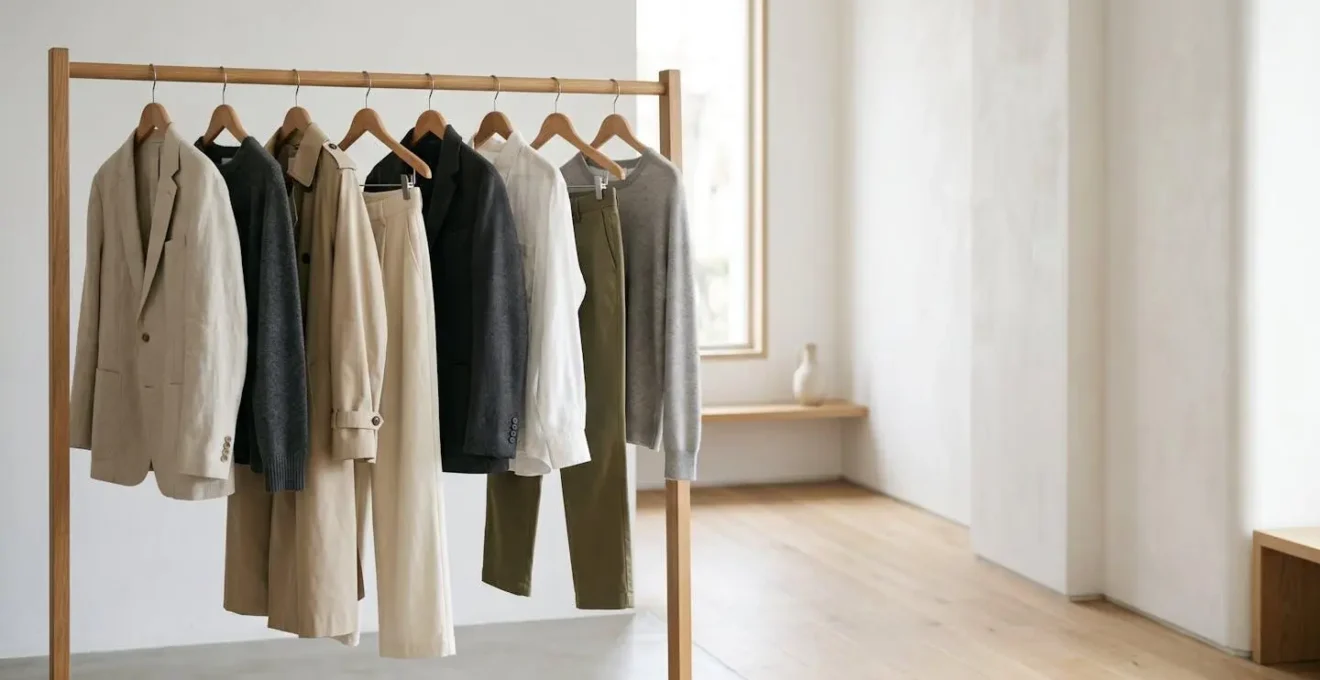
Standing before a wardrobe packed with clothes, yet feeling you have « nothing to wear, » is a uniquely modern frustration. The common response is often a cycle of decluttering, followed by impulsive shopping that refills the space with more disconnected items. The conventional advice to « buy basics » or « only wear neutrals » promises a solution but often results in a wardrobe that feels bland and devoid of personality. You might end up with dozens of items, but they exist as individuals, not as a team.
What if the answer wasn’t about ruthless subtraction or adherence to a bland, minimalist aesthetic? The true power lies in a strategic shift in thinking: from collecting clothes to building a system. This guide breaks down the myth that variety requires volume. We will explore a new kind of wardrobe mathematics, where each piece is chosen for its exponential power to connect with others. This isn’t about creating a smaller wardrobe; it’s about building a smarter, more powerful one.
This approach moves beyond the surface-level « what » of capsule wardrobes and delves into the « how » and « why. » You will learn to recognise true versatility, balance colour with personality, and understand the profound financial and ethical benefits of a more considered approach. The goal is to build an efficient, clutter-free wardrobe that not only works for your life but also brings you joy and expresses your unique style signature.
This article will guide you through the core principles, from understanding the maths of versatility to making conscious purchasing decisions. Below is a summary of the key areas we will cover to help you build your own high-performance wardrobe.
Summary: A Strategic Guide to Building a High-Performance 30-Piece Wardrobe
- Why Do 10 Versatile Pieces Create More Outfits Than 50 Random Items?
- How to Recognise Genuinely Versatile Clothing Before Purchasing?
- All-Neutral Wardrobe vs Coordinated Colour Capsule: Which Works Better Long-Term?
- The Minimalist Wardrobe Trap of Deleting Your Personality for Versatility
- Should Your Wardrobe Have 30 or 50 Pieces Based on Your Actual Life?
- Why Does Changing Your Diet Matter 10x More Than Buying Eco Laundry Detergent?
- How to Monitor Your Spending in 10 Minutes Per Week Without Stress?
- How Can You Make Ethical Purchases Without Doubling Your Living Costs?
Why Do 10 Versatile Pieces Create More Outfits Than 50 Random Items?
The core principle of a capsule wardrobe is not minimalism for its own sake, but efficiency through mathematics. A wardrobe of 50 random items—a trend-driven blouse, a dress for a specific event, trousers in a hard-to-match colour—often results in very few actual outfits. Each piece has limited « interconnectivity. » In contrast, a small, curated collection of versatile items creates an exponential number of combinations. This is the difference between an arithmetic collection and a geometric wardrobe system.
Think of it as a simple multiplication problem. If you have 11 tops that all work with 7 pairs of bottoms, you don’t have 18 pieces of clothing; you have a potential 77 unique outfits right there. This is a core finding from research on capsule wardrobe mathematics, which demonstrates that with a few dresses and outerwear options added, a 30-piece collection can easily generate over 100 distinct looks. A large wardrobe of disjointed items can rarely compete with this level of combinatorial power.
The goal is to select pieces that act as powerful multipliers. Every new item shouldn’t just add one more piece to the pile; it should multiply the potential of what’s already there. This re-frames shopping from a hunt for novelty to a strategic search for high-connectivity assets. It’s a shift from quantity of items to quantity of outfits.
A capsule wardrobe isn’t about minimizing your closet; it’s about maximizing the cost per wear.
– Alicia Lloyd, Stitch Fix stylist quoted in Modern Retail
This mindset transforms your wardrobe from a passive storage unit into an active, efficient system designed to serve your life and style.
How to Recognise Genuinely Versatile Clothing Before Purchasing?
The success of a capsule wardrobe hinges entirely on the versatility of its components. But « versatile » is a subjective term often misused by brands. A truly versatile piece is a workhorse that can adapt to multiple contexts. Recognising this quality before you buy is a crucial skill that prevents costly mistakes and wardrobe clutter. It requires a more analytical approach than simply asking, « Do I like this? »
Instead of focusing on trends, assess a garment’s potential through a practical lens. Key indicators of versatility include fabric quality, colour compatibility, and its ability to span different levels of formality. A high-quality fabric, for instance, not only lasts longer but also drapes better and resists wrinkles, making it suitable for more occasions. Scrutinising the weave, stitching, and material composition is not being picky; it’s performing essential due diligence.
This macro-level view of fabric quality reveals the foundation of a garment’s longevity and adaptability. A tight, consistent weave suggests durability, a key component of a versatile, long-lasting piece.
As the image highlights, texture and build quality are tangible markers of versatility. This detailed inspection, combined with a mental checklist, is your best defence against impulse buys and ensures every new addition enhances your wardrobe’s overall power.
Your Pre-Purchase Versatility Checklist
- Colour Integration: Does the piece work with your existing core colour palette and harmonise with at least 70% of your current wardrobe?
- Formality Spectrum: Can the item be styled for at least three different dress codes (e.g., casual weekend, smart-casual office, evening drinks) through changes in footwear and accessories?
- Cross-Seasonality Test: Is the fabric’s weight and style wearable in at least three out of four seasons, either on its own or with layering?
- Fabric Performance: Assess the material for durability markers. Look for a tight weave, quality stitching, wrinkle resistance, and a high percentage of natural fibers like wool, cotton, or Tencel.
- The ‘Mental Styling’ Rule: Before purchasing, can you vividly and quickly visualise at least seven distinct outfits using items you already own? If you struggle, it’s a red flag.
By internalising these checks, you move from a reactive consumer to a strategic wardrobe architect.
All-Neutral Wardrobe vs Coordinated Colour Capsule: Which Works Better Long-Term?
A common entry point into capsule wardrobes is the all-neutral palette: a sea of black, white, grey, and beige. This approach guarantees maximum interconnectivity and is undeniably simple. In fact, Stitch Fix’s 2024 Style Forecast found that 88% of its clients were most likely to adopt « wardrobe builders » like neutral knits. However, for many, this strategy can lead to style fatigue and a feeling of lost identity, making it unsustainable long-term.
The more advanced, and often more joyful, alternative is the coordinated colour capsule. This method involves choosing a base of 2-3 versatile neutrals (e.g., navy, cream, camel) and then adding 2-3 accent colours that all work with each other and with the neutrals. This provides the same combinatorial power as an all-neutral wardrobe but infuses it with personality and visual interest. It’s a system that allows for expression while maintaining strict operational efficiency.
The psychological benefits of this curated approach are significant. It’s not about restriction, but about mindful curation that reduces daily stress. In fact, a phenomenological study on capsule wardrobe adopters found that participants experienced reduced stress levels and increased joy in their fashion choices. The coordinated capsule provides mental clarity and reduces the decision fatigue associated with overstuffed, chaotic wardrobes.
Case Study: The Psychological Impact of a Curated Wardrobe
A study involving women who adopted a 3-week capsule wardrobe revealed profound positive outcomes. Participants reported a significant reduction in morning stress and decision fatigue. More importantly, they felt a detachment from the pressure of fleeting fashion trends and a newfound joy in their clothing. By having a coordinated system where « everything goes with everything, » the cognitive load of getting dressed was lifted, freeing up mental energy for more important tasks and fostering a more positive relationship with their personal style.
Ultimately, the best system is one that balances operational ease with personal expression, ensuring your wardrobe serves both your practical needs and your spirit.
The Minimalist Wardrobe Trap of Deleting Your Personality for Versatility
The appeal of a streamlined, efficient wardrobe is undeniable; research shows that a staggering 87.5% of people express interest in the concept of a capsule wardrobe. However, in the pursuit of ultimate versatility, a common pitfall emerges: the « beige-ification » of personal style. By focusing too heavily on generic basics and neutral colours, it’s easy to create a wardrobe that is functional but utterly devoid of personality. This is the minimalist trap—sacrificing your style signature for the sake of interchangeability.
True style, however, is not conveyed through colour alone. It can be found in silhouette, texture, and the unique cut of a garment. A well-constructed capsule wardrobe should have a strong foundation of versatile basics, but it must also include « signature » pieces. These are the items that inject your personality—a jacket with a sharp, architectural shoulder; trousers with a distinct wide-leg cut; a top made from an unusual, tactile fabric. These pieces may be less versatile in the strictest sense, but they are essential for making the wardrobe feel like *yours*.
The key is to ensure these signature pieces still align with your colour palette and can be paired with at least a few of your core basics. This way, they elevate your outfits from merely functional to truly expressive, without compromising the integrity of the system.
As this image demonstrates, a strong personal style can be communicated powerfully through form and structure, even in a muted colour palette. It’s about choosing pieces that make a statement through their design, not their decoration.
Your wardrobe should be a reflection of who you are, not a copy of a generic minimalist template.
Should Your Wardrobe Have 30 or 50 Pieces Based on Your Actual Life?
The « 30-piece wardrobe » has become a popular, almost mythical, benchmark in the world of minimalism. While it’s a catchy and useful concept to illustrate the power of a small, curated collection, it is not a universal prescription. The optimal size for your wardrobe is not a magic number; it is a direct function of your unique lifestyle, career, climate, and laundry cycle. A rigid, one-size-fits-all number is the enemy of a truly functional wardrobe.
To put this in perspective, industry data reveals that the average person owns far more, with American women for example averaging around 103 items. While this is often excessive, it highlights how arbitrary a number like 30 can be. Instead of fixating on a specific count, the better approach is a needs-based audit. List your regular activities: work (and its dress code), exercise, social events, hobbies, lounging at home. Each of these « life categories » requires a certain number of outfits.
Someone who works from home in a creative field might need fewer « office » clothes and more comfortable, versatile separates. A corporate lawyer, on the other hand, will require a larger rotation of formal suits and shirts. The goal is to have *enough* clothing to meet the demands of your life without excess or stress. For some, that might be 25 pieces; for others, it could be 55. Further sustainability research indicates that a ‘sufficient’ wardrobe, balancing variety and function, might consist of around 74 garments. The point is not the number, but the justification behind it.
Ultimately, a successful capsule wardrobe is defined by its utility and the joy it brings you, not by its adherence to an external rule.
Why Does Changing Your Diet Matter 10x More Than Buying Eco Laundry Detergent?
In the context of fashion, your « diet » refers to your consumption habits. While small changes like switching to eco-friendly laundry detergent are positive, their impact is minuscule compared to the effect of changing what—and how much—you buy. The uncomfortable truth is that the most significant environmental impact of our clothing comes from its production and, more importantly, our rate of consumption. To make a real difference, we must address our « fast fashion diet. »
The scale of the problem is staggering. According to environmental impact assessments, the fashion industry is responsible for about 10% of global carbon emissions—more than all international flights and maritime shipping combined. This enormous footprint is driven by a model that encourages constant, rapid consumption of cheaply made goods. Every time we purchase a low-quality, trend-based item destined for only a few wears, we are feeding this system.
This is compounded by the fact that we are wearing our clothes less than ever before. Consumption research reveals that global clothing utilization—the average number of times an item is worn—has plummeted by 36% in the last 15 years. Many of us have wardrobes full of items that are rarely, if ever, worn. A capsule wardrobe directly combats this problem at its source. By focusing on buying fewer, better-quality items that you will wear repeatedly, you are effectively putting yourself on a more sustainable « consumption diet. »
Reducing your consumption « intake » is the single most powerful environmental action you can take regarding your closet.
How to Monitor Your Spending in 10 Minutes Per Week Without Stress?
A key benefit of a capsule wardrobe is the potential for significant financial savings, but this only happens with conscious tracking. With the average American household spending nearly $2,000 annually on clothing, often while wearing only 20% of their wardrobe, there’s a clear disconnect between spending and value. A simple, stress-free weekly review can bridge this gap, turning mindless spending into intentional investment. This doesn’t require complex spreadsheets; a 10-minute weekly ritual is all it takes.
The system is built on a few simple, consistent actions. By isolating clothing expenses and evaluating potential purchases against their long-term value, you can transform your financial relationship with your wardrobe. The goal is to make the « cost-per-wear » (CPW) metric a central part of your decision-making process. This shifts the focus from « how cheap can I get this? » to « how much value will this provide over its lifetime? ».
Implementing a quick weekly check-in can help you stay on track with your wardrobe goals. Consider these simple steps:
- Isolate and Log: Use a budgeting app to create a specific « Clothing & Alterations » category. At the end of each week, take 2 minutes to log any purchases from that category.
- Review Your Wishlist: Maintain a « 30-Day Purchase List » for desired items. Every week, review this list. Often, the initial urge will have passed, and you can simply remove items, saving you money effortlessly.
- Calculate Potential CPW: For any item that survives the wishlist, perform a quick calculation: Price / Estimated Number of Wears. If the resulting cost-per-wear is higher than your target (e.g., £1), question if the purchase is truly worth it.
- Track Your Wins: Note how much money you’ve saved by not buying items from your wishlist. This positive reinforcement is a powerful motivator.
This simple process replaces financial anxiety with a sense of control and empowerment, ensuring your wardrobe is an asset, not a liability.
Key takeaways
- True wardrobe efficiency comes from the mathematical power of versatile pieces, not the sheer number of items.
- Mastering the « cost-per-wear » metric is the secret to affording high-quality, ethical pieces and achieving long-term value.
- A functional wardrobe is not a one-size-fits-all number; it is a personalized collection tailored to the specific demands of your life.
How Can You Make Ethical Purchases Without Doubling Your Living Costs?
The phrase « ethical fashion » often conjures images of expensive, niche brands, leading to the assumption that conscious consumption is a luxury. This is a misconception rooted in a focus on upfront cost rather than long-term value. The most powerful tool for making ethical purchasing affordable is a simple metric: Cost Per Wear (CPW). By shifting your mindset from the price tag to the CPW, high-quality, ethically-made garments become the most financially prudent choice.
An ethical, well-made jacket might cost £200, while a fast-fashion alternative costs £50. The initial saving of £150 seems significant. However, the true cost is revealed over time. This is where market trends towards minimalism become relevant, as market research indicates that in 2025, approximately 41% of younger shoppers in developed markets identified as minimalist adopters, showing a clear shift in consumer thinking.
Case Study: The True Cost of a Jacket
Consider a high-quality, ethically-produced £200 jacket. Its durable construction and timeless design mean you might wear it 100 times over several years, resulting in a cost per wear of just £2.00. In contrast, a trendy, poorly-made £50 jacket might only be worn 5 times before it looks dated or falls apart. Its cost per wear is a staggering £10.00. As this cost-per-wear comparison demonstrates, the « cheaper » item was actually five times more expensive in the long run.
Adopting a capsule wardrobe naturally encourages this mindset. When you buy fewer items, you can allocate more of your budget to each piece, prioritising the quality and ethics of its production. This is the foundation of affordable, ethical consumption: buy less, choose well, and make it last.
By focusing on the long-term value delivered by each garment, you build a wardrobe that is not only kind to your wallet but also to the planet and its people.